


The answer to who owns the chattels when you die, may not be as simple as you expect at first sight. That’s because you may own something more valuable than you believe, that your children could end up squabbling over.
If you leave a will behind to resolve this, then you should be able to influence the outcome. But even that may not be cast in concrete, because precedents in UK law may override your wishes.
Your First Step Is To Leave a Proper Will
You cannot return from the ‘blue beyond’ to fix a mistake in your will, after you pass away. This makes a strong case for asking a solicitor to draft one for you, and to administer your wishes when you die. Your major investments are usually easy to define, that just leaves your loose gear to sort out.
English law defines our personal possessions as chattels. The reason why our law calls them that, is another story for another day. For now let’s stay with the definition of all tangible moveable possessions, other than items used solely or mainly for business purposes or held as an investment’.
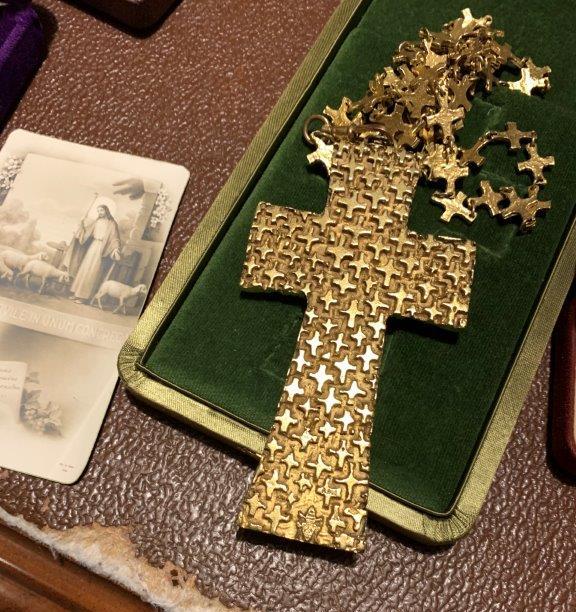
There Is Value in Small Things ©Avery Associates
Defining Who Owns the Chattels in Your Will
There are three ways you might prefer to indicate who owns the chattels in your will when you die. None of these are perfect, but then life seldom is:
- Ask your executor to share your chattels equitably among your heirs in terms of value. This opens a can of worms, because value as we know it can be in the eye of the beholder when the hunt is on.
- Include a list of your chattels in your will, indicating which heir receives each one of them. This can be an onerous task both for you and your solicitor, and it is not that easy to change your mind later.
- Leave it up to your executor to decide who owns the chattels, based on an informal ‘letter of wishes’ you leave behind. This is easier to keep up to date, but is not officially part of your will and can be challenged.
But When Is a Chattel Not a Chattel?
Chattels are loose possessions that we can touch and feel, and move around. This distinguishes them from land, buildings, and financial investments, including stocks, shares, and bank and building society accounts.
A loose pile of stones lying at the bottom corner of the garden therefore falls under the definition of chattels. However, if we build the stones into a wall, then they become a fixture and are part and parcel of the land.

There is another interesting angle to the debate who owns the chattels when we pass away. In a nutshell, when we attach a freestanding possession permanently it becomes part of the property. Think of an antique marble bust cemented to a wall, for example.
Who Owns the Chattels in a Rented Property?
Most leases require that tenants take all their possessions with them at the end of the contract. By the same token, they have to leave all the fixtures behind, because these ‘belong to the property’.
The recent case of Peel Land and Property v TS Sheerness Steel Ltd added an interesting spin to this principle. In this instance, the tenant was a steel works that in the nature of their business left their signature on the land. At the end of the lease there were two contentions between the parties:
- Several cranes on rails on the land that the tenant wished to remove.
- A large pile of slag that the landlord expected the tenant to remove.
The court determined that the rails were firmly attached to the ground and had become part of the property. Whereas the cranes moved on the rails and belonged to the tenant. The slag pile was also removable, and the size was irrelevant.

Remember These Differences When You Leave Your Will
FIXTURES
A fixture is permanently attached to a property, and might be irreparably damaged if removed. An acid test in a dispute is the intention of the person who placed the fixture there.
If you leave a building or a piece of land to someone in your will, then your bequest includes all the fixtures attached thereto. Therefore, you cannot by definition bequeath a fixture as a separate item.
CHATTELS
A chattel is a separate item that you can remove from a property. An acid test is whether you can do so, without damaging it or the property. Therefore, you can decide who owns the chattels independently of who owns the building or piece of land.
How to Value Buildings, Land and Chattels
Avery Associates offer a comprehensive valuing service in respect of land, buildings, and personal chattels. Knowing their value is an essential input to estate planning. Email us or give us a call for advice on what you are actually worth.
More Information
Assessing Chattels For Their Probate Value
Comparable Evidence In Fixed Property Valuation
Jeff is reliable, extremely knowledgeable and personable. I know when instructing Jeff to assist me with probate valuations for my clients, and when I’m acting as an executor to an estate, he will not let me down. Unlike other companies Jeff and his team go the extra mile. Ella Millett.


