


The COVID-19 crisis has changed the way we relate with each other, at least for a long time to come. That’s because close proximity, and strange environments cause us anxiety, even when we are with familiar friends. And a meeting with a stranger exaggerates that fear. Researchers Yasara Nayanthara Somaratne, James Collett and Alexander De Foe from RMIT University in Melbourne Australia tried a different approach.
They decided to do a virtual assessment of hoarding behaviour instead, perhaps as a workaround for their own insecurity. They hoped to obtain more information about differences in reasoning among compulsive hoarders. We report on their findings on the Science Direct website.
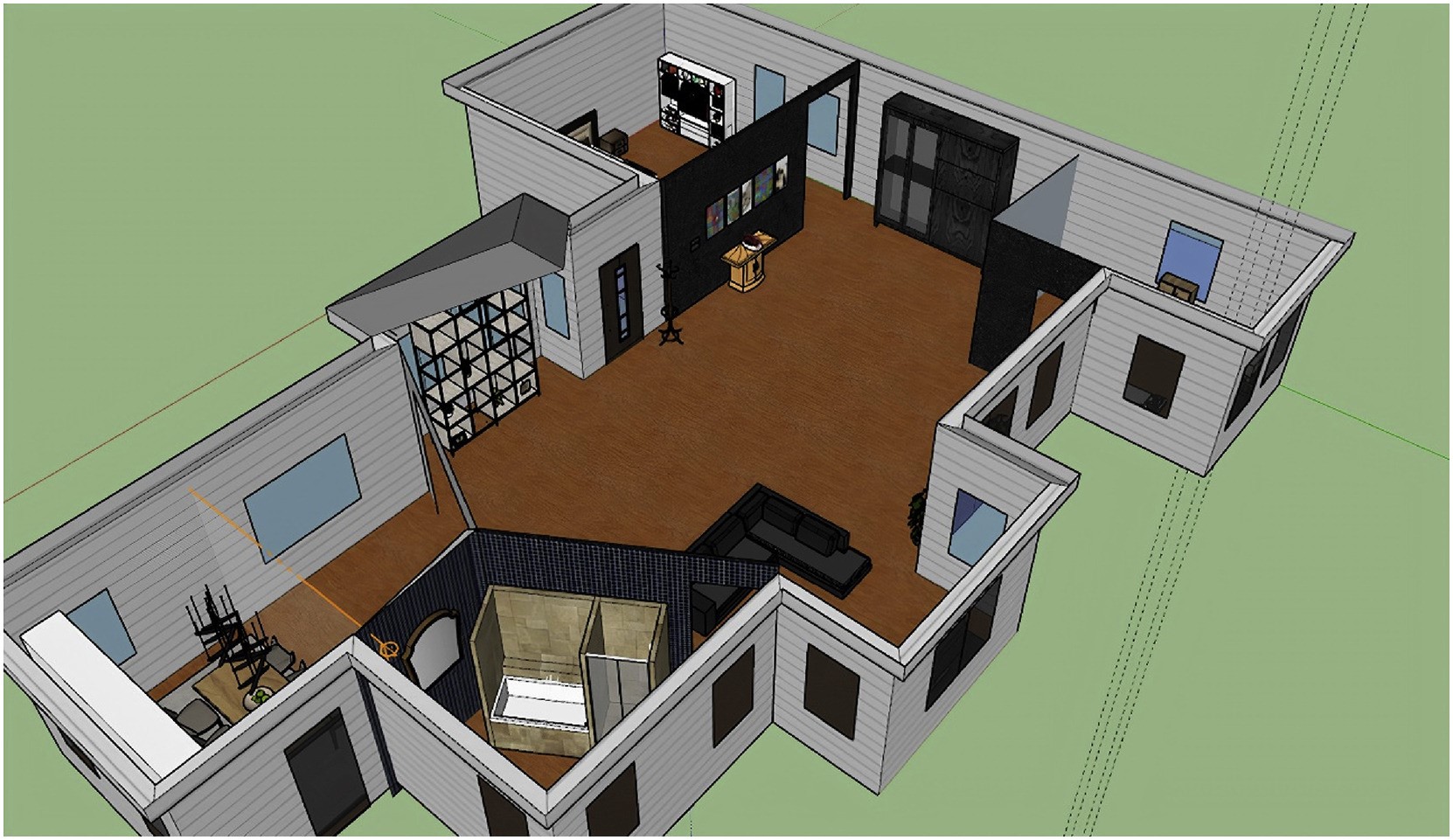
The Clean, Uncluttered House (Image Somaratne, Collett, De Foe)
How They Conducted Their Virtual Assessment of Hoarding
First, Somaratne, Collett, and De Foe found twenty volunteers willing, and able to help. Moreover, these represented a broad spectrum of hoarding styles, and they met the need for social distancing by using the self-reporting method.
1… First, they created a virtual graphic of a house with cluttered and open spaces.
2… Secondly, they separated their volunteers into high-hoarding and low-hoarding groups.
3… And finally they presented their virtual world to them, in order to gauge their responses.
The Response of the High-Hoarding Group
The high-hoarders were firstly more likely to experience higher emotional attachment, and to have greater difficulty processing it intellectually too. But their assessment of the virtual hoard also showed they had different approaches to appraisal and behaviour.
The team wanted to determine if a virtual environment could enhance their understanding of hoarding deficits. They concluded it did because (a) it allowed participants to visualize a different perspective of their condition, and (b) it could contribute to their knowledge of their behaviour.
Point of Departure of the Virtual Assessment of Hoarding
Somaratne, Collett, and De Foe approached chronic hoarding as a progressive mental disorder from the beginning. As a result, they linked difficulty discarding possessions with these factors:
1… Fear of discarding things that might be useful in future.
2… Exaggerated sentimental attachment to the objects
3… Relying on them to make up for ‘unmet social bonds’
4… Difficulties in reaching decisions to dispose of them
5… Strong beliefs in their responsibility for curating them
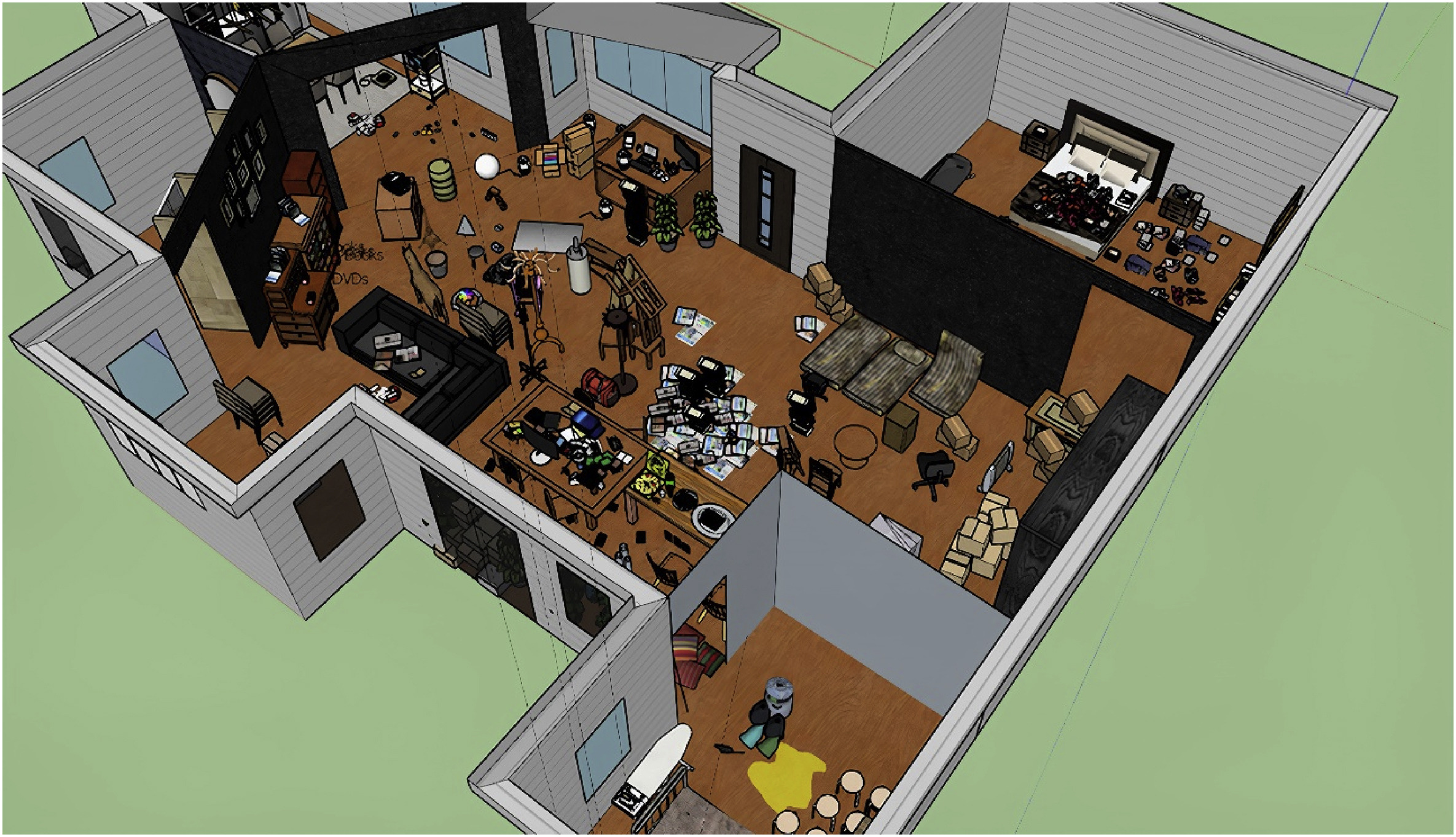
The Chaotic Cluttered House (Image Somaratne, Collett, De Foe)
At the Core of the Study: The Moral Standards
First, the participants involved in the virtual assessment of hoarding were all volunteers, and moreover the RMIT University Human Research Ethics Committee approved the project. Where after open advertisements invited participation. Chosen volunteers scheduled time for an interview with the student researcher, who excluded applicants under eighteen. This was therefore the only person they met. The selected volunteers were also at liberty to withdraw from the study, and at any point in time.
First the student researcher asked them to examine the house, before virtually travelling through cluttered and clean versions. And then, when the exercise was complete the facilitator asked them to complete the following form, now populated with the study results:

Emotional and Information Processing (Image Somaratne, Collett, De Foe)
The Significance of These Findings
Somaratne, Collett, and De Foe believe their pilot study adds to understanding of the deficit characteristic of hoarding behavior. However, their particular contribution was creating a virtual environment for participants to explore, and they made two contributions.
In the first instance, the differences they identified between high-hoarding and low-hoarding groups confirm previous findings. And in the second, the former’s emotional and intellectual differences point the way to further research, as do their difficulties discarding possessions.

Statistical Assessment of Results (Image Somaratne, Collett, De Foe)
More Information about Compulsive Hoarding
Situational Hoarding – Fresh Insights into Clearing a Hoarded House

