


When a friend has hoarding disorder, what does this mean? You have been patient about the state of their home, but now the place is becoming unsafe. Your friend has a mental condition that drives them to keep on saving things. To them this feels normal, although we do appreciate your concerns.
So What Exactly Is This Hoarding Disorder?
Hoarding is a state of mind where the person with the condition accumulates things, regardless of their monetary value. These objects may be domestic supplies, clothing, newspapers, magazines and so on, but they could be other things too.
Your friend is likely to be a compulsive hoarder, and not a downright eccentric, if they become upset when you complain. So your first take-away from this article is to avoid distressing them about their condition, if you value their friendship.
Does My Hoarding Friend Have a Rare Disorder?
No not at all. As many as 5% of the people living in the United Kingdom may have the condition. Although not all cases are reported and so the data is incomplete. If your friend is over 60, then they are more likely to be a compulsive hoarder. Moreover, the likelihood increases if they have other psychological conditions.
Is Hoarding Obsessive Compulsive Disorder?
Yes and no would be about the best answer. You see, obsessive compulsive disorder is an umbrella term for a set of mental conditions. When a friend has hoarding disorder they are part of this group. However, you could single them out as a hoarder, if their clutter leads to an unsafe and unhealthy home.

Perhaps My Hoarding Friend is a Collector?
We perfectly understand if you find all this psychology worrying. Please understand these terms refer to a life style, not a certifiable mental condition. There are overlaps between hoarding and collecting, but there are also distinct differences too:
- Many folk feel driven to collect certain types of items. However, the difference from hoarding is they are selective and organise their collection.
- Compulsive hoarders are different in that there is no logic in the way their things pile up. Moreover, their behaviour also affects their daily life.
Things may reach the stage where your friend’s hoarding disorder threatens their safety, and their social links to the people dear to them. If this is what brought you to this article, then you may find the following information helpful.
Lines of Thinking for Treating Hoarding Disorder
We say ‘lines of thinking’ because there are several theories how to go about this. We strongly recommend that you don’t experiment with these ideas yourself. Rather find a specialist with a credible reputation that you can trust.
How Cognitive Behavioural Therapy May Help
There is a strong, triangular relationship between belief, emotion and behaviour. The one affects the other, and with three factors involved all kinds of outcomes are possible. Cognitive Behavioural Therapy attempts to unravel situations like hoarding, by understanding how they happen.
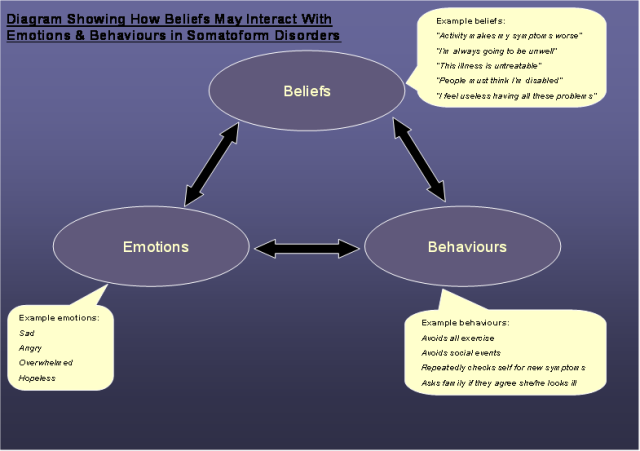
Cognitive Behavioural Therapy may help your hoarder understand the links between how they think, and the compulsive hoarding that this triggers. This may inspire them to modify their thought processes, and manage their attachment to their hoarded items.
This approach may help your friend reduce the number of items they collect. It could help them sort through their clutter, and discard at least some of the items that are taking control of their lives.
Motivational Interviews May Relieve Hoarding Disorder
The above approach may be well and good for some people, but first we need to get them to the point where they want help. Motivational interviewing aims to achieve this by (a) helping hoarders relate their hoarding to their values and goals. And then (b) re-align any behaviour that conflicts with their goals.
Re-Skilling a Friend With Hoarding Disorder
Sometimes we need to get back to basics. Your friend may have lost touch with basic housekeeping. If you believe that this might be the case, then your friend may benefit from a refresher course perhaps including these topics:
- How to solve common problems they experience with their clutter.
- How to identify unnecessary items, and how to get rid of unwanted things.

Disposing Items No Longer Needed (Donald Don BY CC 4.0)
How To Dispose of Unwanted Hoarded Items
Avery Associates regularly clear the homes of deceased people, especially elderly folk who die leaving a lifetime of possessions behind. We have a dedicated team guided by a professional valuer who identifies items of collectible value, and sets them aside so relatives can decide what to do with them.
We offer a similar service by clearing clutter from hoarded homes in Greater London, and the Southeast of England. Please follow this link to reach out to us. We won’t charge to answer general inquiries and provide estimates. You will find our prices are fair, and our people a pleasure to work with.
More Information


