


Losing a family member or a close friend is tough enough, without having to deal with the paperwork. Yet many ordinary people suddenly find themselves appointed as the executor of a deceased person’s estate. One of the first legal terms they encounter is ‘probate’. Understanding what probate means, and how to apply for it should make their task easier.
This article is not legal advice. It is simply our opinion, gained after decades valuing deceased estates for solicitors. We should always get second opinions before making irreversible decisions.
Find Out What Probate Is
Your first step is to find out what probate means, and how to apply the principles correctly. Probate is a legal process that gives an executor authority to deal with a deceased person’s estate.
That estate includes everything the person owned, such as property, bank accounts, investments, vehicles, personal belongings, and any debts they left behind.
If the deceased left a valid will, then the executor named in that will usually applies for a legal document called a grant of probate. This document tells banks, building societies, government departments, and other organisations that the executor has the authority to manage the estate.
However, not every estate requires probate. For example, assets owned jointly with a spouse may automatically pass to the surviving owner. Some smaller estates may also not require probate. But applying for it may be unavoidable if the deceased owned property, or had substantial financial assets.
To summarise at this point, you now know what probate means, but not whether you need to apply for it.
The Will Is The Controlling Authority
Here’s what you should do as the executor of a deceased estate:
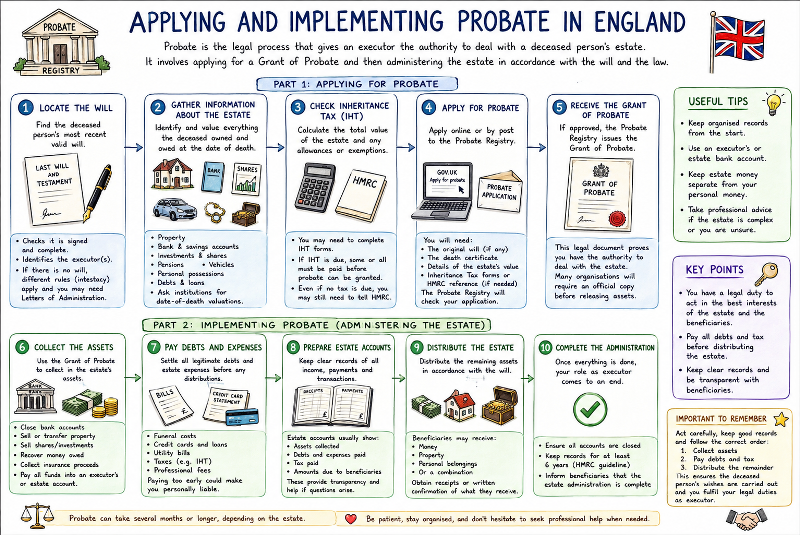
STEP 1: LOCATE THE WILL
Your first task is to find the deceased person’s most recent, valid will. This document should identify the executor, and explain how to share the estate between the heirs:
- Check that the will is signed and appears complete. If no valid will exists, then different rules apply. You may need to apply for letters of administration instead of probate. Once you have that authority the processes are similar.
STEP 2: WHAT THE WILL MEANS
You first need to understand what the will says, and whether you need to apply for probate. Begin by identifying and valuing everything the deceased owned, and what they owed at the date of their death.
These assets and liabilities may include property and land, bank and savings accounts, investments and shares, and pension benefits. Other factors include vehicles, personal possessions, outstanding debts and loans, utility bills, and credit card balances.
The net value of the estate influences everything else you do. You should not guess. Unless you are a financial expert, you should consider approaching a professional valuer for assistance.
STEP 3: IS THERE INHERITANCE TAX DUE?
You now understand what probate means and why you need to apply. Establish whether inheritance tax is due on the estate, after checking for any tax allowances or exemptions.
If tax is due, then you may need to pay some or all of it, before you can obtain your grant of probate.
STEP 4: APPLY FOR YOUR GRANT OF PROBATE
You have now valued the estate, and determined the inheritance tax position. The door is now open, you can apply for probate (or letters of administration). You may do this on the internet or post a hard copy. Remember to include the following information:
- The official paperwork.
- The original will, if one exists.
- The death certificate.
- Information about the estate’s value.
‘STEP 5: RECEIVE THE GRANT OF PROBATE
Understanding what probate means, and how to apply for it, pays dividends when your grant of probate arrives.This document is extremely important.
It allows you to close bank accounts, sell or transfer property, cash-in investments, and collect assets on behalf of the estate. Many financial organisations will ask to see an official copy before cooperating.
STEP 6: RATIONALIZE THE ESTATE’S ASSETS
You can now rationalise the estate’s assets, which may include closing bank accounts, selling property, selling shares or investments, recovering money owed to the estate, and collecting insurance payouts.
Remember to open a dedicated executor’s or estate bank account to create a record of these transactions
STEP 7: PAY THE ESTATE’S DEBTS
You must settle all outstanding debts and estate expenses before the heirs receive anything.These may include funeral costs, credit card balances, utility bills, loans, professional fees, and taxes. Remember, you may be held personally liable if you skip this step.
STEP 8: FINALISE THE ESTATE ACCOUNTS
An executor should maintain clear records throughout the administration process. These should include assets collected, debts paid, outgoing expenses, taxes paid, and amounts due to beneficiaries.
These records provide transparency and help resolve any questions from beneficiaries.
STEP 9: DISTRIBUTE THE ESTATE
Once debts, taxes, and expenses are settled, the executor can distribute the remaining assets according to the will. Beneficiaries may receive money, property, personal belongings, or a combination of these.
The executor should obtain receipts or written confirmation showing beneficiaries have received their inheritance.
Final Thoughts on Administering Probate
You now have a clear understanding of what probate means and how to apply the law. Probate may sound complicated at first.
At the end of the day it is about gathering a deceased person’s assets, valuing them accurately and correctly, paying their debts, and distributing what remains to their beneficiaries.


