


Compulsive hoarding, stripped down to the basics, is an unstoppable urge to collect and hang on to possessions. However, this hoarding does occur in isolation. To understand it fully we need to view hoarding in the context of society and culture.
We share our own personal viewpoint in the paragraphs that follow. That does not mean we are armchair travelers. We have helped hoarders and their families clear cluttered homes for decades. We have experienced what follows personally, and have become something of experts.
Society, for the purposes of this article, is the wider community in which we live. And culture is the way that society does things. Hence, compulsive hoarding is more than a problem of personal clutter. It affects families, neighbourhood, housing, health services, and the way society understands mental health.
Hoarding, Society and Culture Are Intertwined
Possessions of little practical value can fill a hoarder’s living space, and make normal daily activities become difficult, over time. Hoarding disorder affects between 2 and 6 of every 100 adults in England, making it more common than many people may think.
Hoarding in the context of society and culture does not mean they get on well together. Society, in general, often misunderstands compulsive hoarding. We find that many people assume that hoarders are simply untidy, lazy, or unwilling to clean. In reality, hoarding disorder is indeed a recognized mental health condition.
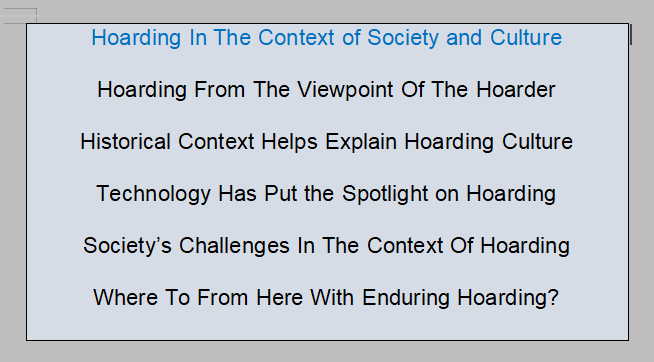
Hoarding From The Viewpoint Of The Hoarder
People who hoard often develop strong emotional attachments to objects. They may either believe an item could become useful in the future, remind them of an important memory, or provide comfort and security. Throwing away possessions can cause them genuine anxiety and distress.
Culture also shapes attitudes toward possessions. In many modern societies, advertising encourages people to buy more goods, and seek happiness through ownership. Shopping has become a leisure activity for most of us!
Most consumers manage their purchases without difficulty. Although this culture can make hoarding harder to recognize. When society often praises collecting and acquiring, the line between normal ownership and unhealthy accumulation will become blurred.
Historical Context Helps Explain Hoarding Culture
Hoarders have their own particular way of doing things too. The historical background we come from adds a layer of understanding to hoarding, in the context of society and culture:
- People who lived through war, famine, economic depression, or severe poverty sometimes developed habits of saving and storing items. These behaviours often helped families survive difficult times.
- In some communities, keeping spare materials, food, tools, or clothing remains a sign of readiness rather than wastefulness. What one culture views as sensible saving, another culture may see as excessive accumulation.
- Compulsive hoarding has appeared in literature for centuries. Long before doctors formally recognised hoarding disorder, writers described characters who collected and guarded possessions obsessively.
- Authors such as Honoré de Balzac and Charles Dickens included hoarding characters in their works. These examples show that society has lived with hoarding behaviour for a very long time.
Technology Has Put the Spotlight on Hoarding
Technology has changed society’s approach to hoarding in our culture. We have noticed with some concern, how television and social media have blurred public understanding, including with fake news.
Although, at the same time, more serious commentators have helped the public understand how hoarding is a serious mental health issue, rather than a simple housekeeping problem.
Society’s Challenges In The Context Of Hoarding
Compulsive hoarding can create challenges for communities. Severe clutter may increase fire risks, block emergency exits, attract pests, and damage buildings. Local authorities sometimes become involved when a cluttered property threatens the safety of residents, or neighbours.
These real, practical dangers put hoarding in a new context for society and culture. Some cities have laws or regulations that address extreme hoarding situations. However, officials often face a difficult balance between protecting public safety, and respecting personal property rights.
Families often carry a large emotional burden too. Relatives may feel frustrated, worried, or helpless when a loved one’s living conditions deteriorate. Arguments about possessions can damage relationships and increase social isolation.
Children who grow up in heavily cluttered homes may experience embarrassment, and avoid inviting friends to visit. As a result, hoarding disorder can affect several generations, not just the individual who hoards.
Where To From Here With Enduring Hoarding?
We have noticed with interest, how society has increasingly viewed compulsive hoarding through the lens of mental health, rather than an individual weakness.
Researchers, healthcare professionals, social workers, and community organizations are working on better ways to identify and treat the condition. Greater awareness has also reduced some of the stigma surrounding hoarding, although misunderstanding remains common.
We are convinced that by recognizing the complex social, cultural, and psychological factors involved, society will come to respond with greater compassion, while still addressing the practical challenges that will be with us as long as compulsive hoarding continues.
More Information On Our Blog


